Your Water Damage Crew in Meridian Hills
When water hits your floors at 2 AM, Meridian Hills Water Restoration delivers fast, around the clock emergency water damage restoration across Meridian Hills, from burst supply lines to sewage backups and storm intrusion. IICRC certified crews handle the full job, extraction, structural drying, mold remediation, and reconstruction, while coordinating with your insurance carrier from the first call.
If we miss your call because we're out helping another homeowner, we'll call you back within 15 minutes.


For water damage restoration in Meridian Hills, IN, Meridian Hills Water Restoration brings truck mounted extraction, commercial drying equipment, and IICRC certified technicians, around the clock, with written scopes and insurance coordination. Call (317) 342-7736 for dispatch.
- Services: water damage restoration, basement flooding, sewage cleanup, storm damage
- Service area: Meridian Hills, Marion County, IN and surrounding areas
- Response time: Same day for Meridian Hills inquiries; 24/7 emergency service available
- Licensed and insured (License #RC21100059)
- Serving Meridian Hills, IN since 2018
Schedule Your Free Damage Assessment
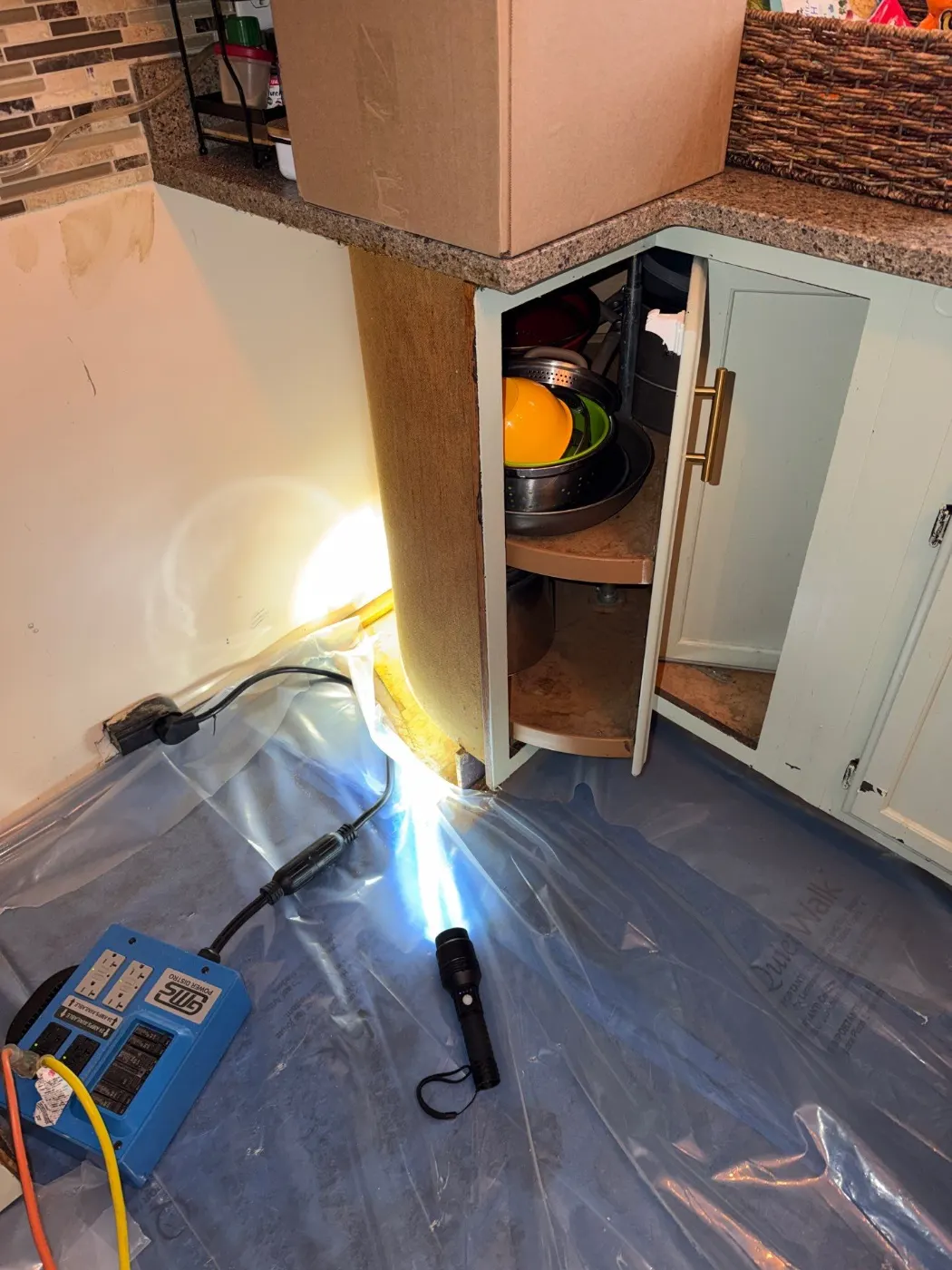
Every inspection in Meridian Hills starts with a room by room walkthrough, because the visible wet spot is rarely the full footprint of the loss. We measure walls at multiple heights with non penetrating meters, check baseboards and trim, pull subfloor readings, lift insulation in suspect cavities, and inspect behind cabinets, under sinks, around water heaters and washing machines, and along basement perimeters and slab joints. Thermal imaging maps hidden moisture inside wall cavities, a penetrating meter confirms readings in framing and subfloor, and a hygrometer logs ambient temperature and humidity so drying calculations are accurate. This level of mapping matters in Meridian Hills because the most expensive water damage problem is not the flood you can see, it is the trapped moisture behind a finished basement wall that feeds mold growth weeks later. We document everything before any equipment goes down.
I agree to be contacted by Meridian Hills Water Restoration regarding my inquiry.
Searching for water damage restoration in Meridian Hills usually starts the same way: standing water where it shouldn't be and a clock already running. Burst pipes, sump pump failures, and storm flooding hit Marion County homes in every season, and the cost of waiting climbs by the hour. The first day decides what gets saved.
Pack out services move vulnerable contents out of the wet zone and into controlled storage: inventoried, photographed, and cleaned as needed. For serious Meridian Hills losses, getting belongings out of the way lets structural drying run faster and protects the items themselves.
Same day service for Meridian Hills water emergencies isn't a stretch goal, it's the operating standard. Extraction equipment stays loaded, crews stay local, and the schedule bends for the family standing in water, because that's the whole job.
Payment Options That Work for You
Restoration is worth doing right the first time. Financing options through Meridian Hills Water Restoration lender partners help homeowners pay over time instead of cutting scope or delaying work.
Pay for your project at a later time, but lock in today's pricing. Ideal for homeowners waiting on insurance settlements.
- No payments for 12 months
- No interest if paid in full
- Lock in current pricing today
Divide your project cost equally across 12 months with zero interest. Most homeowners choose this option for predictable budgeting.
- Equal monthly payments
- 0% interest for 12 months
- Simple, predictable budgeting
Spread your investment over up to 20 years with fixed equal payments. The right choice for larger projects or homeowners who prefer lower monthly amounts.
- Up to 20-year terms available
- Fixed equal payments
- Ideal for larger restoration projects
Subject to credit approval. Ask your project lead for current terms and promotions.
Every Water Damage Restoration Service We Offer in Meridian Hills
From the first emergency call to the finished repair, Meridian Hills Water Restoration documents each step of the work in your home.
Water Damage Restoration in Meridian Hills
Full scope water damage restoration for Meridian Hills homes, from initial moisture assessment and extraction through structural drying, mold prevention, and reconstruction. IICRC S500 protocol on every job.
Learn moreBasement Flooding in Meridian Hills
Basement flooding response for Meridian Hills properties, including water extraction, structural drying of finished and unfinished basements, dehumidification, and reconstruction of damaged walls, flooring, and trim.
Learn moreSewage Cleanup in Meridian Hills
Serving Meridian Hills: category 3 sewage cleanup with full containment, HEPA filtration, antimicrobial treatment, and documented removal of contaminated porous materials, followed by structural drying and rebuild.
Learn moreStorm Damage in Meridian Hills
Storm driven water intrusion cleanup for Meridian Hills homes, addressing wind driven rain, foundation seepage, window failures, and water entering through storm damaged building envelopes.
Learn moreCommercial Water Restoration in Meridian Hills
For Meridian Hills addresses, commercial water damage restoration for offices, retail, and multi tenant properties, with extraction, drying, and reconstruction scaled to keep business operations moving wherever possible.
Learn moreCommercial Flood Damage Cleanup in Meridian Hills
For Meridian Hills addresses, commercial flood damage cleanup including bulk water removal, contaminated material disposal, structural drying of large footprints, and coordination with property managers and carriers.
Learn moreCommercial Sewage Cleanup in Meridian Hills
Serving Meridian Hills: commercial sewage cleanup with IICRC S500 and S520 protocols, full containment, antimicrobial treatment, and post remediation verification for restaurants, healthcare, and multi unit properties.
Learn moreCommercial Mold Remediation in Meridian Hills
For Meridian Hills addresses, commercial mold remediation per IICRC S520, including containment, HEPA filtration, removal of affected materials, antimicrobial application, and air sampling when warranted.
Learn moreCommercial Storm Damage in Meridian Hills
In Meridian Hills, commercial storm damage restoration covering water intrusion from severe weather events, with rapid extraction, structural drying, and rebuild coordinated around tenant and operational needs.
Learn more
Local Expertise, Real Results
Built on documented moisture readings, written scope, and the same crew from extraction through final paint, the work earns the trust in Meridian Hills.
When you discover water in your Meridian Hills home, you have a short window to make decisions that affect the next 30 days of your life. Meridian Hills Water Restoration answers Meridian Hills emergency calls 24 hours a day with a typical 2 hour dispatch on emergencies, IICRC trained crews, and the documentation your insurance carrier requires from photo one.
Meridian Hills Water Restoration provides water damage restoration in Meridian Hills and the surrounding Marion County communities, including Williams Creek, Crows Nest, Nora, and Meridian Kessler. Our crews are dispatched to Meridian Hills homes for everything from a slow dishwasher leak under the kitchen floor to a fully flooded basement after a spring storm. The technicians who arrive are IICRC certified, licensed, and insured, working as experienced technicians rather than crew, which means the same accountable team is on your property from extraction through final paint. The wooded lots, custom homes, and full basements that define Meridian Hills come with their own restoration challenges, and we have built the workflow around them.
Every Meridian Hills job runs against the IICRC S500 standard for water damage restoration, with S520 protocols applied any time mold remediation enters the scope. That means the first hour on site is moisture mapping with thermal imaging and penetrating meters, not guessing where the water traveled. From there we move into controlled extraction, structural drying with monitored air movement and dehumidification sized to the affected volume, and antimicrobial application when the Category of water warrants it. Before reconstruction touches a stud, materials are verified dry against unaffected baseline readings. The point of the rigor is simple: no hidden moisture left behind to feed mold three weeks after the trucks leave.
Our Promise
Three things every Meridian Hills homeowner gets from Meridian Hills Water Restoration. First, fast emergency response day or night, with a certified crew dispatched as soon as the call comes in. Second, IICRC certified technicians trained to the S500 standard for water damage and S520 for mold, working with commercial grade extraction, drying, and monitoring equipment. Third, a free on site inspection before any work begins, with clear scope, written findings, and coordination with your insurance carrier if you have an active claim.
What Sets This Meridian Hills Crew Apart
Certified crews, thorough moisture mapping, and clear scope before any work begins, the standard Meridian Hills Water Restoration brings to every Meridian Hills water damage call.
Fast Emergency Response
Water spreads by the minute, and Meridian Hills Water Restoration runs priority emergency dispatch around the clock for Meridian Hills. A certified technician leads every response, with extraction equipment, dehumidifiers, and air movers already loaded on the truck. The faster the source is contained and water removed, the less demolition the job requires later.
IICRC S500 Certified Crews
Our technicians work to the IICRC S500 standard, which dictates how water is categorized, how drying is executed, and how moisture is verified. In practice that means logged meter readings, structural drying targets matched to your unaffected materials, and antimicrobial treatment when Category warrants it. No shortcuts that show up as mold three weeks later.
Mitigation Through Rebuild
Most Meridian Hills jobs do not end at dry, they end at restored. We handle extraction, drying, controlled demolition, mold remediation, and the reconstruction that follows, drywall, flooring, trim, paint. One company through every phase keeps the schedule tight and the scope consistent.
Insurance Coordination
We work with your insurance carrier directly on documentation, photo records, moisture maps, and scope justification. For Meridian Hills homeowners that means less time on the phone with an adjuster and a cleaner claims file. We work with your insurance carrier, and we make sure the paperwork supports your claim.
Real Jobs. Real Results.
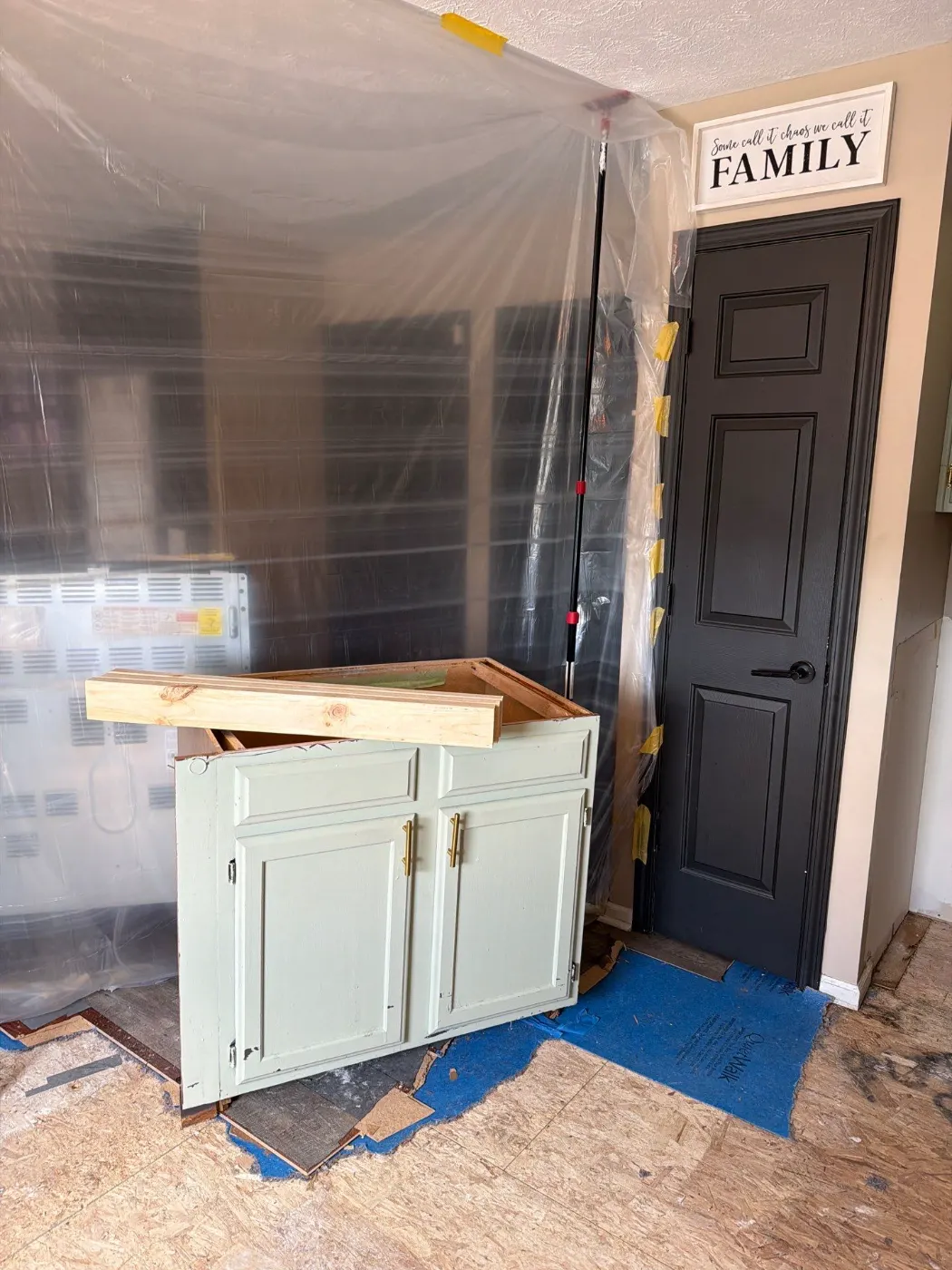
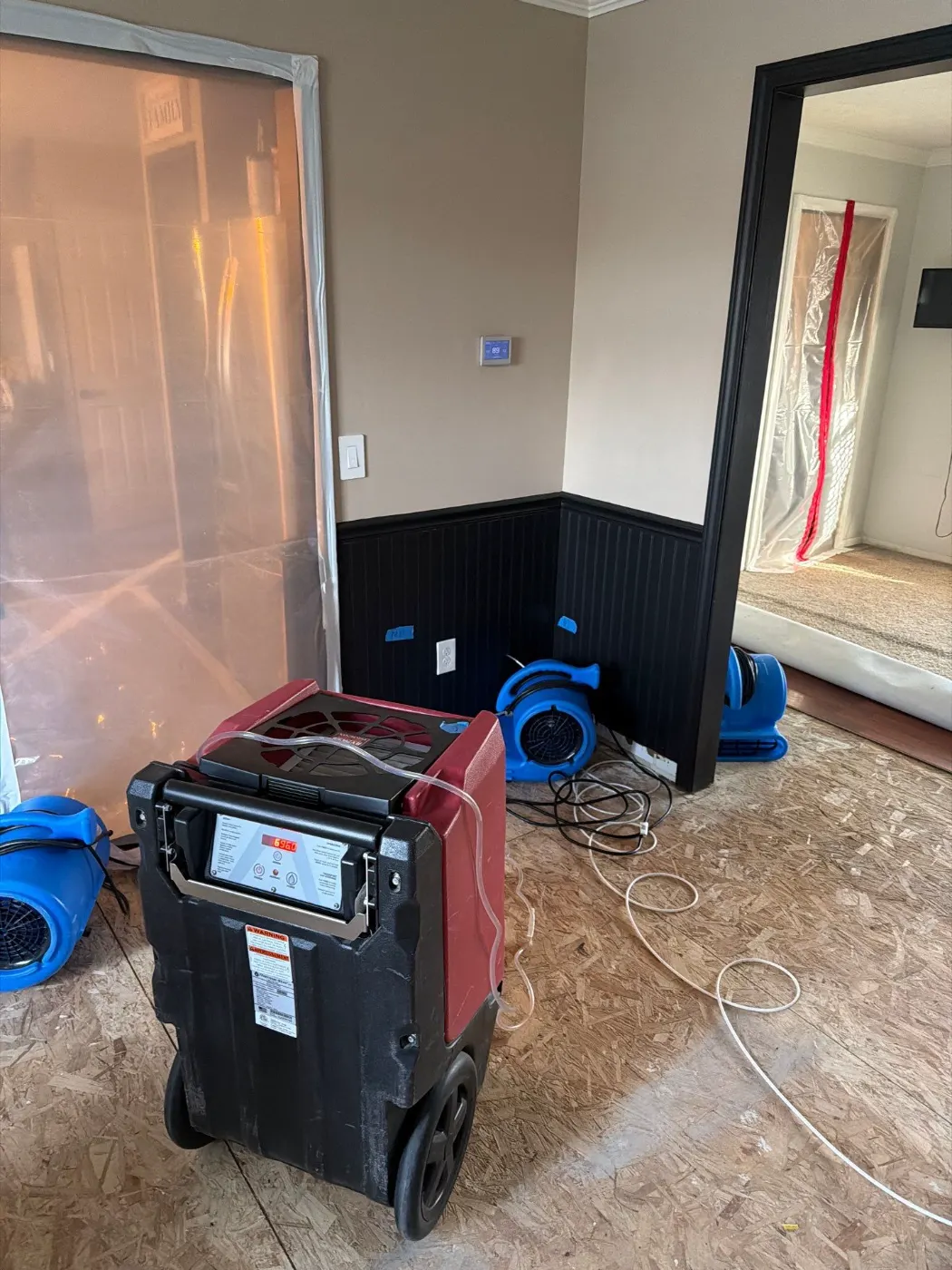
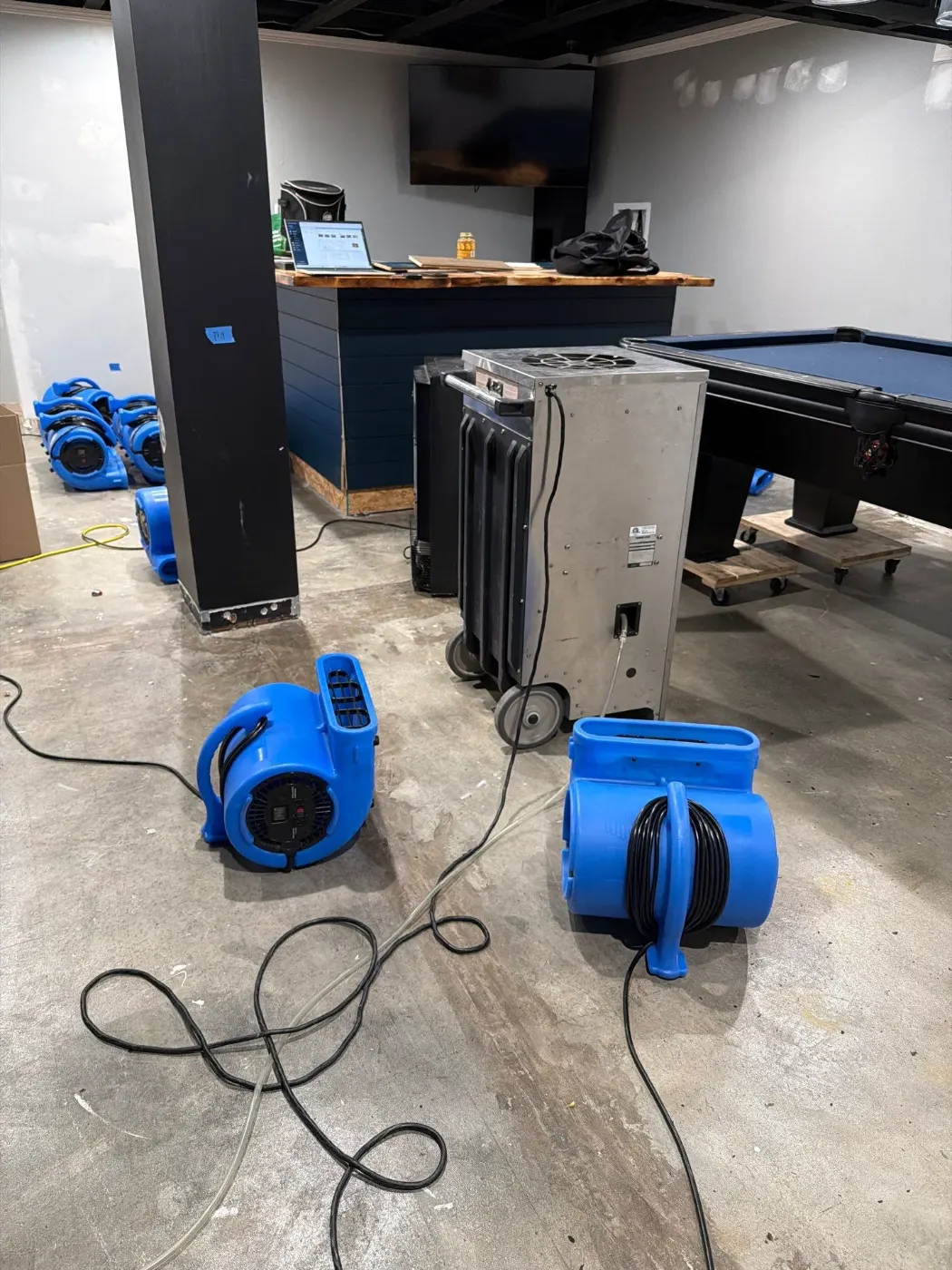
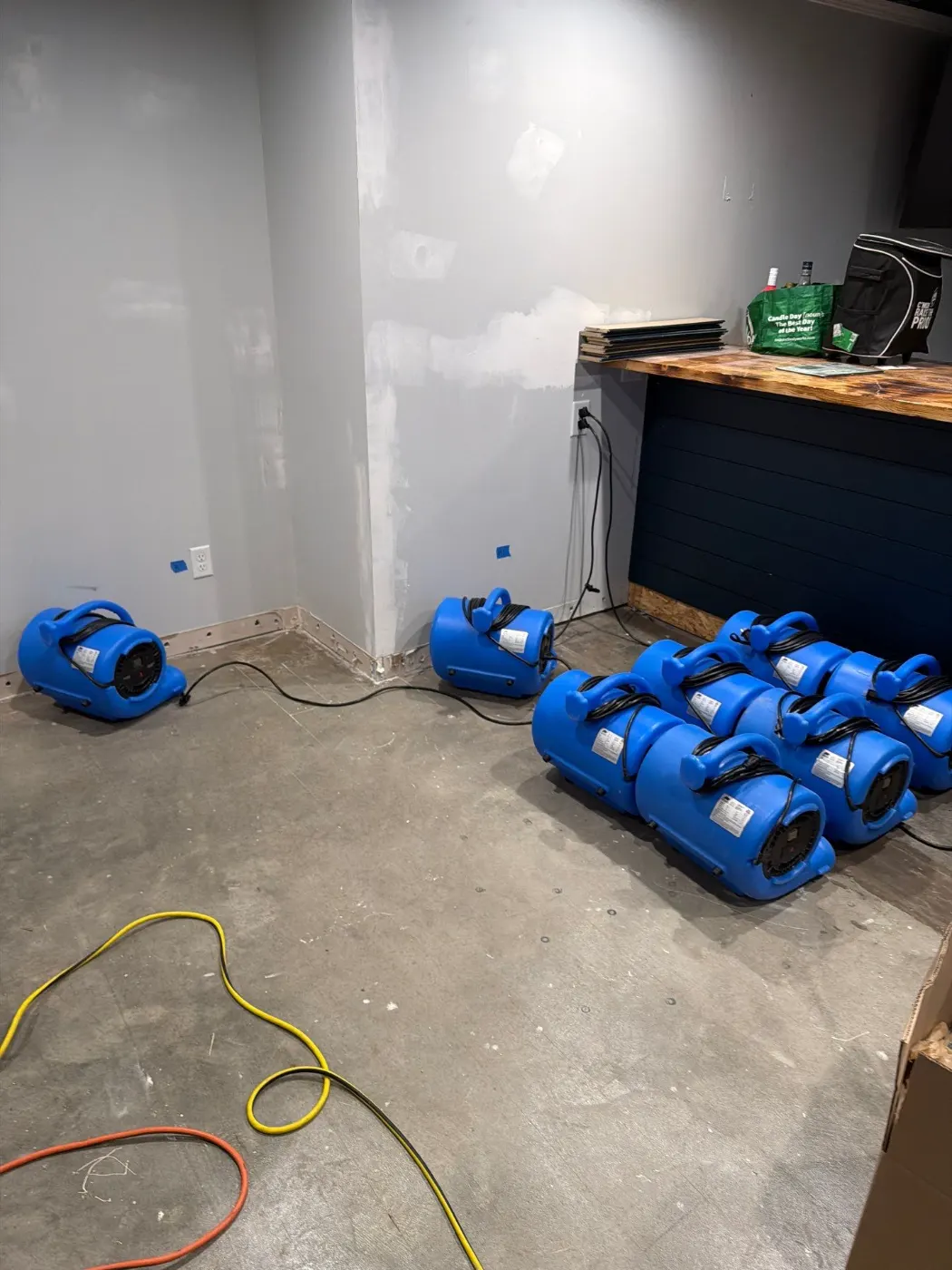
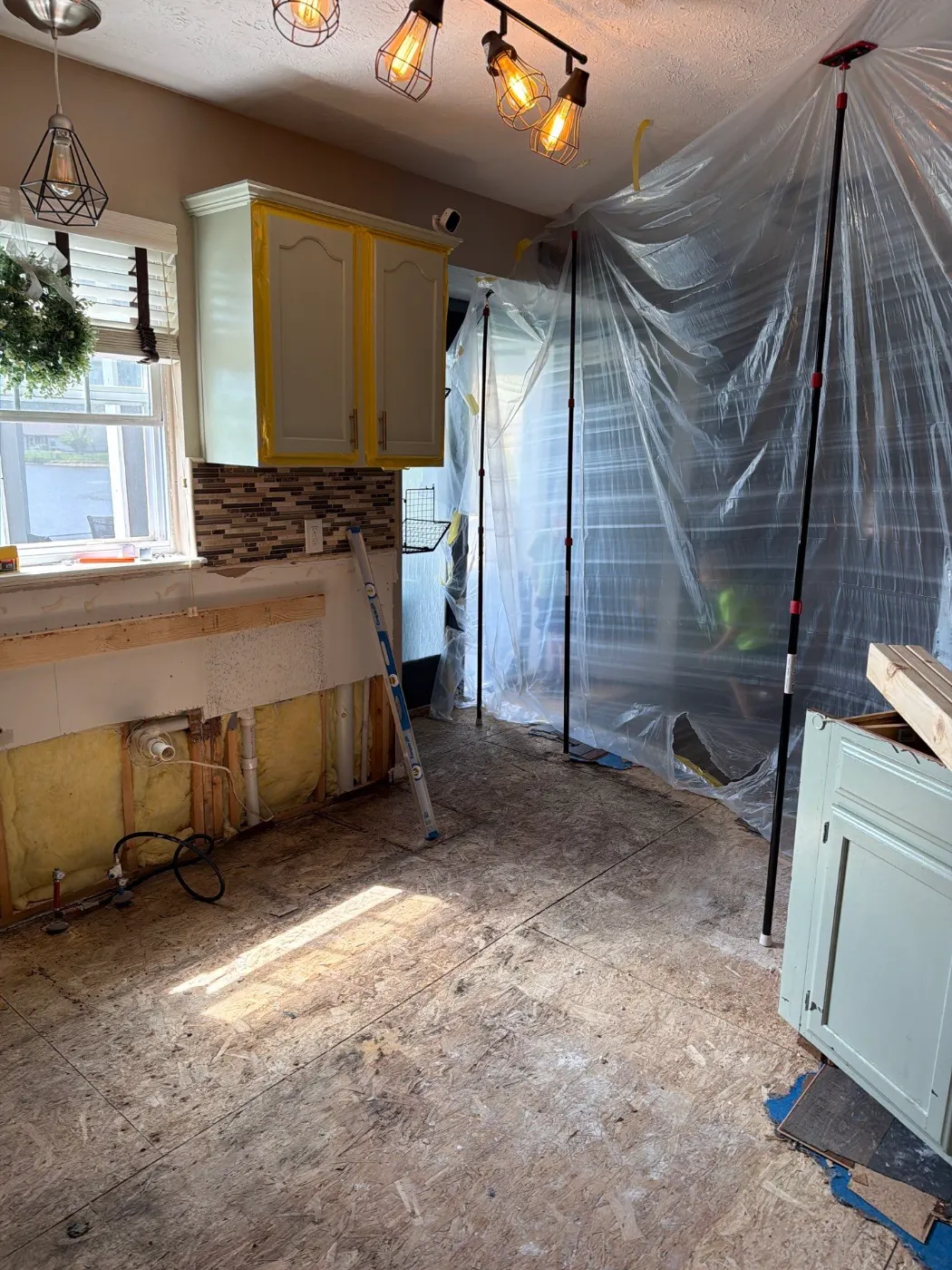
Recent water damage restoration work across Meridian Hills and Marion County, from burst pipe extractions and basement flooding to Category 3 sewage cleanup and full reconstruction after storm intrusion.
How a Meridian Hills Water Loss Gets Handled
The first phase on any Meridian Hills loss is assessment. A certified technician walks the property, identifies the source (broken supply line, appliance failure, sewage backup, storm intrusion through a window or foundation crack), and runs thermal imaging and meter readings across affected and adjacent materials. Water is classified per the IICRC S500 standard as Category 1 (clean water from supply lines or appliance overflow), Category 2 (gray water from dishwashers, washing machines, or toilet overflow without solids), or Category 3 (black water, sewage, floodwater). This phase typically takes 1 to 2 hours and produces the written scope that drives everything that follows.
Once scope is set, we move into documentation and insurance coordination. Every affected area is photographed and video documented before mitigation begins, with a written moisture map and meter readings logged for the file. We contact your insurance adjuster directly, walk them through the findings, and align the scope of work to your coverage so the claim moves cleanly. Most Meridian Hills homeowners never have to chase paperwork themselves, we send the documentation, justify the mitigation steps per industry standard, and keep you updated as the adjuster reviews. You stay focused on the household, we handle the file.
Drying execution comes next. Air movers and dehumidifiers are placed based on structural drying calculations, sized to the affected square footage and the materials involved. Crews return daily to log readings, reposition equipment, and confirm the structure is trending toward dry standard, meaning moisture content matched to unaffected materials in the same building. Controlled demolition happens only where materials cannot be dried in place. Once readings confirm dry, reconstruction begins: drywall, insulation, flooring, paint, trim, cabinetry resets, and finish work, restoring the affected area to its pre loss condition.
Rapid Emergency Dispatch
Call the 24/7 emergency line and a certified crew is dispatched promptly across Meridian Hills with extraction equipment, dehumidifiers, and meters already loaded. The first technician on site stabilizes the source if it is safe to do so, contains the affected area, and begins extraction. Speed at this stage limits how much demolition the job requires later.
Category Determination
Every job is classified per IICRC S500 protocol as Category 1, 2, or 3, with written assessment, meter readings, and source identification logged. Category drives everything that follows, what gets dried in place, what gets removed, and what level of antimicrobial or containment is required. The classification is documented in your file.
Insurance Partnership
We work with your insurance carrier from the first call, sending photo documentation, moisture maps, and scope justification directly to your adjuster. The goal is a clean claim file with transparent invoicing and no gaps between what is mitigated and what is approved. You stay informed, we handle the technical back and forth.
Verified Dry, Then Rebuild
Daily monitoring continues until moisture readings in affected materials match unaffected baseline readings in the same structure. Only then does reconstruction begin, drywall, flooring, trim, paint, and finish work to return the space to pre loss condition. Drying to verified standard is what prevents mold from showing up after the job is closed.
Water Damage Sources in Meridian Hills
Heavy Rain and Saturated Ground
Ground that has already taken a week of rain has nowhere to put the next storm. The water table comes up, pressure builds against the foundation, and it finds the cold joint, the tie holes, and the open block cores.
Downspouts Discharging at the Foundation
Where downspout water has soaked one spot for years, the foundation tells the story: efflorescence, a damp line, sometimes a hairline crack that weeps. That path gets documented so the repair addresses the source and not only the wet floor.
Fire Sprinkler Discharge
For a Meridian Hills building owner the priority order is the valve, then the electrical, then the water. We coordinate the shutdown with your fire protection contractor, document the affected areas floor by floor, and start extraction while the system is being reset.
Roof Leak Reaching the Ceiling
Storm season in Meridian Hills produces a run of these calls a day or two after the weather, not during it. Wet insulation, damp truss chords, and the stained ceiling get documented together so the roof repair and the interior drying line up on one claim.
Window Well Overflow
Covers help and do not solve it. If the drain under the gravel is dead, water still arrives from the saturated soil around the well. Clearing that drain and fixing the grade above it is what actually keeps a Meridian Hills basement dry.
Water Heater Tank Failure
Set a heater without a drain pan, or pipe the pan to nowhere, and a contained failure becomes a Category 1 loss across the whole floor. We extract, map the moisture under the adjacent flooring, and dry the wall base before the trim swells.
What to Do in the First Hour After Water Damage in Meridian Hills
In the first hour, work through this list in order, starting with the water itself. Everything on it can be done with what you already have at home, and each step makes the drying easier once our crew arrives.
1. Stop the source
For a toilet or a washing machine, close the small shutoff valve behind it. If the leak is bigger, or you can't tell where it starts, close the main valve for the whole house and leave it off until our crew checks the source.
2. Turn off power to wet rooms
Switch off the breakers for wet rooms only when you're standing somewhere dry and the panel is dry too. When the panel sits in a flooded basement, leave it alone and call your electric utility from upstairs.
3. Protect yourself first
If you have to step into wet areas, wear rubber boots and gloves. Take the basement stairs slowly if they're wet, and leave the cleanup of any dirty water to the crew.
4. Clear a path for the crew
Our crew will need to reach the wet walls and floors, so move small items out of the affected rooms when it's safe to do it. Leave heavy furniture where it is until the crew arrives.
5. Pull up rugs and mats
Wet area rugs and bath mats hold water against the floor. Roll them up and move them to a garage or a dry room, and set any furniture that stays behind on foil squares to keep stains off the carpet.
6. Leave wet drywall and carpet in place
It's tempting to start pulling things out, but leave wet drywall and carpet where they are. Our crew takes the damage photos and moisture readings before anything is removed, and that record goes into your photo report.
7. Let the air reach wet spots
In rooms with clean water, open closet and cabinet doors so air reaches the wet spots. On a hot, sticky day, keep the windows closed and leave the air conditioning on, since it pulls moisture out of the air.
8. Call us and describe what you see
When you call, tell us where the water seems to be coming from and which rooms it reached. Those two details help the crew bring the right equipment on the first trip to your Meridian Hills home.
When you've worked through what you safely can, call our 24/7 line, and the crew will pick up from there when they reach your door.
Three Simple Steps
The same three steps apply to a small leak under a sink and to a flooded basement.
Crew En Route
Delay is the only part of this that is genuinely expensive. Our line runs 24/7, and dispatch to your home follows within 2 hours. Dehumidifiers and air movers ride with the crew, sized on arrival.
What the Meters Say
Photos, video, and readings are filed before mitigation touches anything. You see the map before we set a single air mover. Penetrating and non penetrating meters confirm what the camera suggests.
Back to Normal
The meters decide the finish date, which in Meridian Hills is usually 3 to 5 days. Drying, cleaning, and reconstruction run as one continuous project. You keep the documentation for the next owner or the next adjuster.
What the Photo Report Tells You About Water Damage in Meridian Hills
The photo report brings the hidden part of water damage out into the open, with pictures and readings from behind your walls and under your floors. We review it with you before work moves forward in your Meridian Hills home.
Where the water came from
The report starts at the source. If a supply line failed or a drain backed up, the crew photographs the part that failed and where it sits, so you know exactly what needs fixing before the water can come back.
Moisture readings, room by room
Each affected room gets readings at several spots on the walls and floor. The report lists those readings with photos of where they were taken, so you can see where the wet area ends.
Your belongings, documented
Damaged contents get photographed where they were found, along with the rooms around them. If something can't be saved, the photo report shows its condition so you have a record of it.
Saving what can be saved
Drying in place is usually less disruptive than tearing out and replacing, and the readings show when it's possible. The report notes what the crew is drying in place and what it plans to remove, with photos of both.
Updates as the work goes
Drying takes several days in most homes, and the report grows the whole time. New readings and photos get added on each visit, so you always know where things stand in each room.
A conversation in plain words
The report comes with an explanation. We go over the photos and readings with you and answer questions as they come up, so the moisture numbers make sense to you.
Deciding with your insurance company
We document damage with a photo report and walk you through what we found, so you can decide with your insurance company. Read your own policy to see what it covers, because each one is a little different.
Call our dispatch line, and the crew will begin your photo report as soon as they reach your Meridian Hills home.
Questions Worth Asking Before Work Starts in Meridian Hills
Clear answers to these questions make it easier to compare restoration companies in Meridian Hills.
Who will be working in my home?
Ask whether the crew works for the company you called or for a subcontractor, and who's in charge on site each day.
How will you show me it's dry?
Ask for moisture readings on the first visit and the last one, so you can see the numbers reach dry standard.
Can I see an itemized estimate?
Ask for every line item in writing. Many insurers price water losses in Xactimate, so an estimate in that format is easier for an adjuster to review.
Does my policy require a certain company?
Ask your adjuster before you sign anything, and read the work authorization so you know what you're agreeing to.
What happens if you find mold?
Ask how mold behind walls or under floors gets handled, and whether that work is priced apart from the drying.
Who handles repairs after drying?
Ask who replaces drywall, flooring, paint and trim once the structure is dry, and whether one company can do both stages.
Indiana Weather Drives Restoration Calls Year Round
Indiana weather drives water damage calls across Meridian Hills year round. Winter freeze thaw cycles burst supply lines in uninsulated crawl spaces, spring rain saturates already heavy soil and pushes water into basements, and summer thunderstorms regularly trigger flash flooding and sewer backups in older Marion County drainage systems.
Winter Pipe Bursts
Indiana freeze thaw cycles hit Meridian Hills hard, and homes with original galvanized or early copper supply lines in uninsulated crawl spaces and basement rim joists are the most exposed. A single overnight freeze can split a line and release hundreds of gallons before anyone wakes up. When the call comes in, we extract, stabilize the space, and start structural drying the same day.
Spring Saturation Flooding
Spring rain on already saturated ground is the most common driver of basement water intrusion in Meridian Hills. Runoff from the hilly, heavily wooded terrain concentrates fast toward low lying basements, pushing water through foundation cracks, window wells, and slab joints. We deploy extraction equipment, set up containment, and begin drying before secondary damage spreads into framing and finished walls.
Severe Summer Thunderstorms
Summer thunderstorms across Marion County regularly drive flash flooding and sewer backups in older drainage systems. For homes on aging clay or cast iron laterals, a heavy rain event can push sewage up through basement floor drains. We handle Category 3 cleanup with full containment, HEPA filtration, antimicrobial treatment, and documented removal of contaminated materials.
Ice Dam Leaks
When snow accumulates and refreezes at the eave line, meltwater backs up and finds its way into wall cavities, ceilings, and attic insulation. By the time the staining shows on a ceiling, moisture has often spread well beyond the visible area. We map the full footprint with thermal imaging, dry affected assemblies, and remediate any mold growth that has started in the cavity.
From New Builds to Century Homes in Meridian Hills
Open a neighborhood for a quick look at the homes in that part of Meridian Hills and the water risks that come with them.
Where we respond near Meridian Hills
Crews dispatched 24/7 to Meridian Hills and the closest surrounding communities.
Water Damage Risk in Meridian Hills
The conditions that decide how a Meridian Hills job goes.
About Meridian Hills Homes
Residential construction in Meridian Hills began in the early 1920s, with the bulk of the original housing stock built between 1923 and the post-World War II era; the town incorporated in 1937 when roughly 80 homes existed. Homes from this era were typically plumbed with galvanized steel or early copper supply lines, and many older structures still retain original drain systems, with PEX retrofits limited to renovated properties. Architectural styles range from pre war Colonial Revival, Tudor, and English cottage forms to luxury ranches and post war American Traditional designs on generous wooded lots throughout the 1.48-square mile town. The hilly, heavily wooded terrain and custom home tradition in this market make full basements the norm, with many properties also featuring crawl spaces; slab on grade construction is rare in this era and locale.
Where We Work in Meridian Hills
We cover homeowners across Meridian Hills near Meridian Hills Country Club, Holliday Park, Marott Park, Park Tudor School, North Meridian Street, Spring Mill Road, Williams Creek, Wellington Road.
Surrounding Areas We Serve
Our crew also covers Williams Creek, Crows Nest, Arden, Broad Ripple, Nora, Meridian Kessler.
Recent Weather Patterns
The White River, which borders Meridian Hills to the southeast, is a documented recurring flood risk on Indianapolis's north side; in April 2025, heavy rains caused White River floodwaters to inundate approximately 20 homes near 77th Street on the north side, illustrating the active threat from the river system that flanks the town. The broader Indianapolis region experiences major White River flooding predominantly in winter and early spring from heavy rains and snowmelt, while localized summer thunderstorms regularly drive flash flooding and sewer backup events in older urban drainage systems throughout Marion County.
What Our Crew Sees in Meridian Hills
Meridian Hills sits on elevated ground overlooking the White River to the southeast and Williams Creek to the northeast, and while the town proper escapes direct floodplain inundation in most events, storm runoff from the hilly, heavily wooded terrain concentrates rapidly toward low lying basements and crawl spaces, making basement water intrusion a persistent risk. The town's sewer system traces back to mid-20th century expansion,records document sewage capacity problems as early as the 1950s when population grew past 400,meaning original lateral lines in the oldest sections can be decades old clay or cast iron prone to root infiltration and wet weather backup. Indiana's freeze thaw cycles add burst pipe exposure to homes with galvanized or early copper plumbing in uninsulated crawl spaces and basement rim joist areas, a common vulnerability in the 1920s,1950s construction that dominates this market.
The Meridian Hills Area
Meridian Hills has approximately 1,770 residents across roughly 657 to 694 housing units, with a median household income exceeding $205,000,more than double the Indianapolis metro median. The community is dominated by married couple, family households, with a median age around 46, reflecting a stable, long tenured ownership base with significant investment in high value homes.
The Three Phases of a Water Loss in Meridian Hills
The equipment, the containment, and the rebuild, explained.
Emergency response in Meridian Hills starts the moment you call. The truck arrives loaded with commercial water extraction equipment, commercial dehumidifiers sized to the affected square footage, professional air movers, moisture meters, and thermal imaging. Extraction begins promptly on site, with structural drying equipment set the same day and daily monitoring scheduled from that point forward. The work zone is contained with plastic where needed, and unaffected areas are protected so the rest of the house stays livable. Throughout the job you get clear communication on what to expect day by day, what readings show, and when equipment can come out. This phase covers most Category 1 and Category 2 losses, supply line breaks, appliance failures, and clean water intrusion, where fast action limits the scope of demolition.
Specialized containment is what Category 3 work demands, sewage backups, floodwater intrusion, and long stagnant water with biological contamination, along with full mold remediation under the IICRC S520 standard. We install 6-mil plastic barriers from floor to ceiling, seal entry and exit points, and run negative air machines that pull contained air through HEPA filtration before exhausting. Technicians work in full PPE: Tyvek suits, N95 or P100 respirators per S520, nitrile gloves, and eye protection. Contaminated porous materials are cut, bagged, and disposed of per protocol, and remaining structure receives antimicrobial application. When the scope warrants, post remediation verification includes air sampling. This is the phase where IICRC certification matters most, because shortcuts here cause the health problems that show up months later.
Reconstruction is where most restoration jobs hand off to a separate general contractor, two crews, two schedules, two billing cycles, and a home sitting in demolition between phases. Meridian Hills Water Restoration handles the rebuild with the same operation that performed extraction and drying. Drywall is hung, taped, mudded, sanded, primed, and painted. Flooring is replaced, carpet pad, vinyl plank, hardwood refinish, tile reset. Trim and baseboards go back on, cabinetry is repaired or replaced, doors are rehung, and finish work is coordinated. You work with one project manager from initial call through final walk through, on one schedule, with one final invoice. For Meridian Hills homeowners that means the job closes faster and the scope stays consistent with what was documented for the claim.
What to Expect While Drying Equipment Runs in Your Meridian Hills Home
Drying is the longest part of a water job, and it happens while you're living in the house. The notes below cover what the equipment does and what the crew needs from you while it runs.
What each machine does
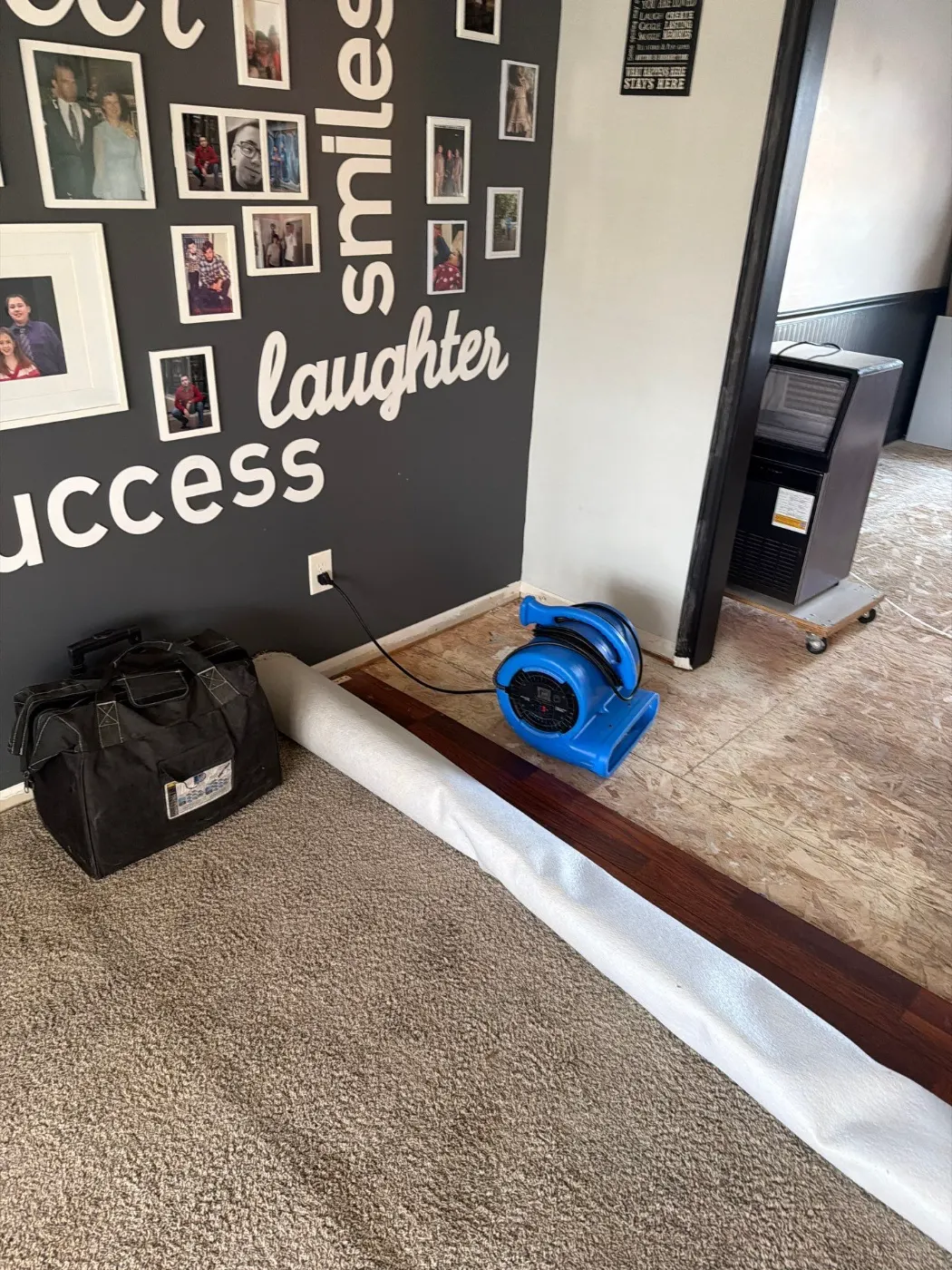
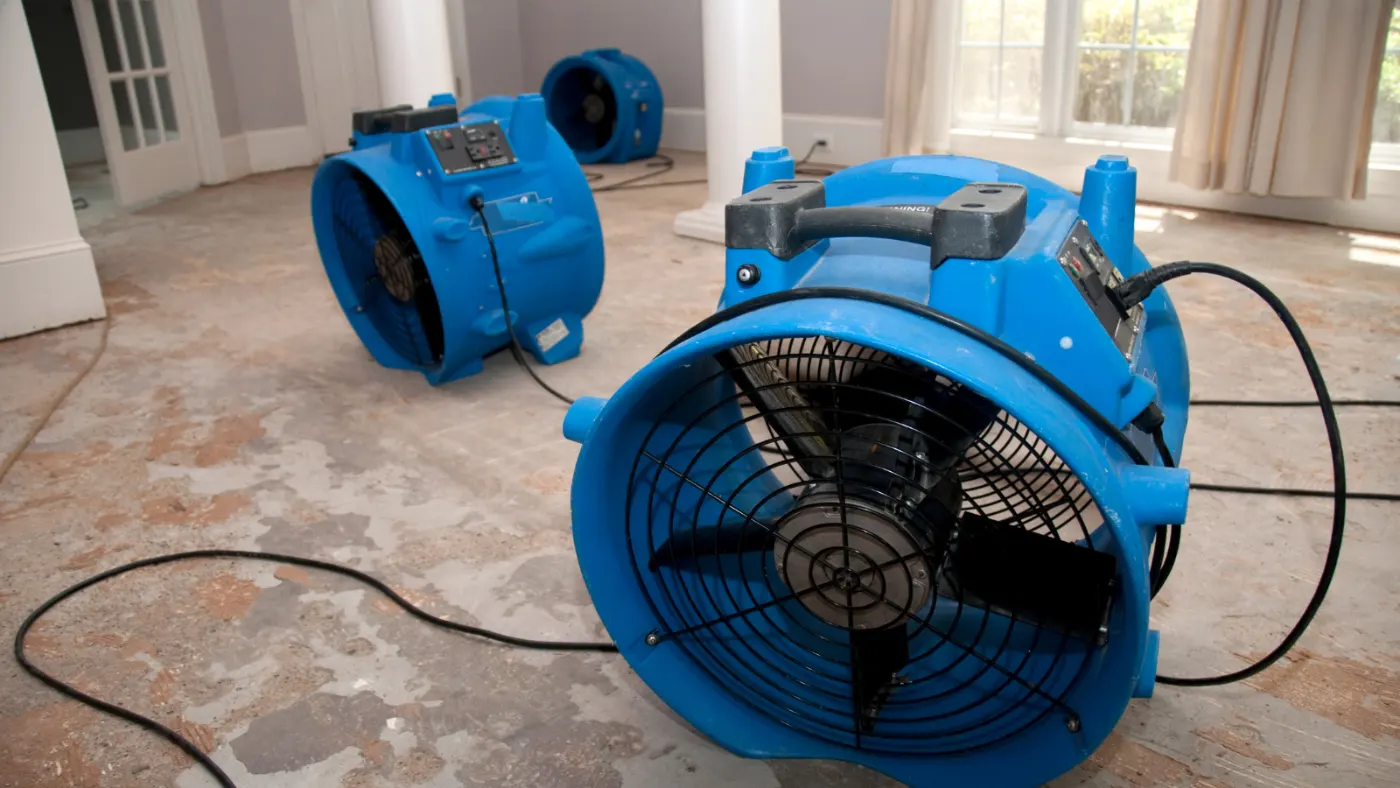
Air movers push air across wet floors and walls so the water evaporates, and dehumidifiers pull that moisture back out of the air. The two kinds of machines work as a pair, so both need to keep running.
Keep everything plugged in
Turning the equipment off slows the drying and can add days to the job. If the noise is a problem at night, call us and the crew will look at the setup with you on their next visit.
Keep windows closed
Open windows let humid outdoor air in, and the dehumidifiers then have to dry that air too. Keep the windows shut in the rooms being dried until the crew tells you to open them.
The equipment uses a lot of power
Drying equipment draws a steady load, so the crew spreads it across different circuits. If a breaker trips, reset it once, and call us if it trips again so the crew can move a unit.
Pets and drying rooms
Pets tend to be curious about the noise and the warm air, so keep them out of the drying rooms when you can. A gate across the doorway works if a door has to stay open.
A crew visit each day
Someone from the crew stops by each day to take readings and move the equipment where it's needed. Tell them about anything new you notice, like a musty smell or a soft spot in the floor.
Why the drying starts right away
EPA says it's important to dry water damaged areas and items within 24 to 48 hours to prevent mold growth. That's why the crew sets up drying equipment on the first visit and checks it each day after.
When the equipment comes out
The equipment comes out when the readings show the materials are dry, and the crew shows you those readings before they pack up. If anything needs repair, that work gets scheduled once the drying is finished.
When the last readings come back dry, we'll go over the photo report with you and plan any repairs your home needs.
Water damage pricing in Meridian Hills
Mitigation ranges calibrated to the Meridian Hills market. Final pricing depends on water volume, materials affected, and IICRC Category.
Water Restoration Questions in Meridian Hills
Common questions about drying time and cost, answered for Meridian Hills homeowners.
Expert Meridian Hills Restoration Crews Available Now
If water is spreading across your Meridian Hills floors right now, or you suspect hidden moisture from a recent storm or appliance failure, Meridian Hills Water Restoration is on call with fast emergency dispatch. Free on site inspection, no obligation, and we coordinate with your insurance carrier from the first visit.