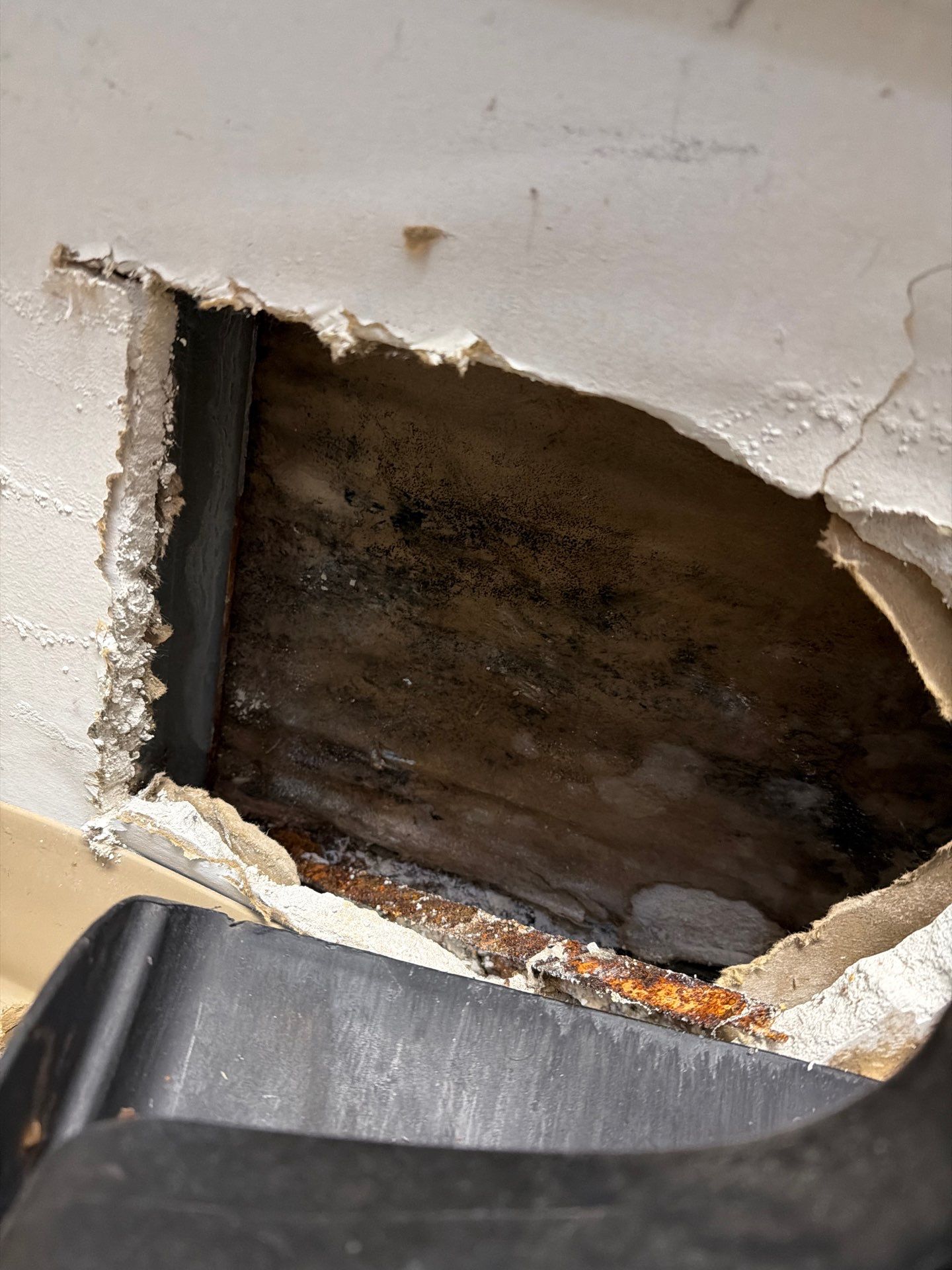
The 48 Hour Rule, Explained Without the Fluff
Here is the timeline mold actually follows after a water loss in a typical Meridian Hills home:
- Hours 0 to 24: Spores land on wet materials. No visible growth yet, but colonization is starting at the microscopic level.
- Hours 24 to 48: Active mold growth begins. Drywall paper, wood, carpet pad, and insulation are prime targets.
- Hours 48 to 72: Visible spots appear. Musty odor sets in. Spore counts climb in the air.
- Days 3 to 7: Colonies spread across porous materials and behind walls. Remediation cost jumps sharply.
- Day 7 and beyond: Structural materials may need full replacement, not just cleaning.
That window from 24 to 48 hours is the dividing line. Hit it with professional extraction and drying, and you usually avoid mold entirely. Miss it, and you are paying for mold remediation after water damage instead of basic mitigation.
What Speeds Mold Growth Up in Meridian Hills Homes
Not every wet basement molds at the same speed. These factors push the timeline faster:
- Indoor temperatures between 68 and 86 degrees Fahrenheit
- Humidity above 60 percent (common in Central Indiana summers)
- Porous materials like drywall, carpet pad, OSB, and cellulose insulation
- Category 2 or Category 3 water (grey or black water carries nutrients)
- Poor airflow, closed doors, and finished basements
- Older homes with organic materials behind walls
- Recent renovations where new drywall is sitting against damp framing
- South-facing rooms that hold heat after summer storms
If three or more of these apply to your situation, assume you are on the fast end of the timeline. Meridian Hills Water Restoration crews often see colonies established in under 36 hours when several of these factors stack together.
Common Myths That Cost Meridian Hills Homeowners Money
A few beliefs we hear on almost every job that simply are not true:
- "It dried on its own, so we are fine." Surface dry is not structural dry. Framing and subfloor can read 25 percent moisture while the carpet feels normal.
- "Bleach kills mold on drywall." Bleach is mostly water, and the water feeds the mold inside the porous paper.
- "Small leaks do not need a pro." A slow dishwasher leak can soak the subfloor for weeks before you notice the buckled floor.
- "My HVAC will dry it out." Standard AC is not built to handle the moisture load of a water loss.
When in doubt, get a moisture reading before you decide the situation is handled. Meridian Hills Water Restoration offers same-day assessments across Meridian Hills, and catching the problem before hour 48 is almost always the cheapest path forward.
The First 6 Hours: What You Should Do Right Now
If water hit your Meridian Hills property in the last few hours, work this list:
- Shut off the water source at the valve or main
- Cut power to affected rooms at the breaker if safe
- Move furniture, electronics, and boxes off wet floors
- Pull up area rugs and lift drapes off the floor
- Open windows only if outdoor humidity is lower than indoor
- Photograph everything for insurance, including water lines on walls
- Call a licensed restoration crew for emergency extraction
Towels and a shop vac will not get you under the 48 hour line on anything bigger than a small leak. Trapped water in the subfloor and wall cavities is the part you cannot see, and it is where mold starts first.
Signs Mold Has Already Started
Check for these before you assume you caught it in time:
- Musty, earthy smell that comes back after airing out
- Dark spots on drywall, especially near the floor
- Discoloration on baseboards or trim
- Visible fuzz on wood framing or subfloor
- Allergy-like symptoms in the household: scratchy throat, headaches, congestion
- Warped or buckling flooring
- Peeling paint or wallpaper that was tight a week ago
- Condensation on supply registers or window frames in affected rooms
One visible spot usually means more behind it. Mold growing on the painted side of drywall almost always means heavier growth on the paper backing facing the wall cavity.
Hidden Spots Where Mold Starts First
When we do moisture mapping in Meridian Hills homes, these are the locations that consistently show high readings days after a homeowner thought the area was dry:
- Behind baseboards and the bottom 12 inches of drywall
- Under vinyl plank, laminate, and engineered hardwood
- Inside carpet pad, especially near tack strips
- Inside wall cavities with fiberglass or cellulose insulation
- Under cabinets, vanities, and kitchen islands
- In crawl spaces and on the underside of subfloor
- Inside HVAC ducts that pulled humid air through during the loss
- Behind tub and shower surrounds where caulk has failed
- Under refrigerators and dishwashers with slow supply line leaks
Surface drying without addressing these hidden zones is the most common mistake we see after DIY cleanup attempts. For deeper guidance on wall cavities, our team also wrote up hidden water damage behind walls and leak detection.
What Slows It Down
- Indoor temps below 60 degrees
- Aggressive air movement from commercial fans
- Dehumidifiers pulling humidity under 50 percent
- Hard, non-porous surfaces like sealed concrete or tile
- Quick removal of saturated porous materials
- Containment that isolates the wet zone from the rest of the home
This is exactly what professional drying setups are designed to do. Air movers and LGR dehumidifiers are not optional toys. They are the difference between drying in 3 days and growing mold in 2.
Water Category and Mold Risk
The IICRC sorts water losses into three categories, and each one changes how fast you need to move:
- Category 1 (clean water): Supply line, sink overflow. Still molds in 48 hours if left wet.
- Category 2 (grey water): Washing machine, dishwasher, shower drain. Higher microbial load, faster growth.
- Category 3 (black water): Sewage, toilet overflow with solids, flood water. Mold and bacteria within 24 hours. Porous materials usually get removed.
A clean supply line leak can degrade to Category 2 within 48 hours just by sitting. If you are unsure where your situation falls, our breakdown of water damage categories walks through real examples.
Why Professional Drying Beats DIY Every Time
- Commercial air movers push 2,800+ CFM versus 200 CFM from a box fan
- LGR dehumidifiers pull 15 to 30 gallons per day from the air
- Moisture meters and thermal cameras find water you cannot see
- Antimicrobial application stops growth before it starts
- Documentation supports your insurance claim
- Daily moisture logs prove the structure reached dry standard before reconstruction
That is the stack you need to beat the 48 hour clock on anything bigger than a small spill.
Cost Difference: Mitigation vs Remediation
Numbers from typical Meridian Hills jobs:
- Emergency extraction and drying within 24 hours: roughly $1,500 to $4,500
- Drying plus partial demolition at 48 to 72 hours: roughly $3,500 to $8,000
- Full mold remediation after a week: roughly $6,000 to $20,000 or more
- Structural rebuild after deep mold: often $15,000 plus
Insurance often covers sudden water losses and the resulting mitigation. Mold coverage is more limited, and many policies cap mold remediation at $5,000 or $10,000. Acting inside the 48 hour window is usually the difference between a covered claim and a partially covered one.